
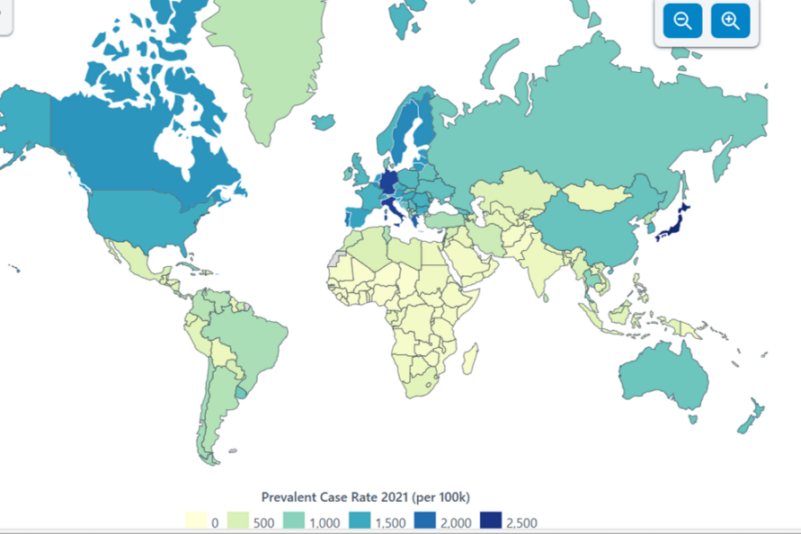
Abstract: Need for AI in Dementia & Alzheimer’s Detection Our AI-driven approach addresses this gap by enabling detection through simple handwriting analysis. Handwriting reflects a combination of cognitive and motor functions, and subtle changes in speed, pressure, stroke patterns, and coordination can indicate early neurological decline—often before visible symptoms appear.
Key Words: Alzheimer’s, Dementia, Graphometry, Handwriting, HEM, HAST-Medicare, Qualitative and Quantitative Data.
Introduction: Once fully developed, the software will analyze these patterns in real time, transforming handwriting data into measurable indicators of cognitive health. This will provide a non-invasive, accessible, and scalable solution for early screening.
Alzheimer’s Handwriting: In the paper “Effect of Cognitive Fluctuation on Handwriting in Alzheimer’s Patient: A Case Study” by Emanuela Onofri, an example of Alzheimer’s handwriting and deterioration is shown. As seen in Figures 1A and 1B, the rate of deterioration within three days is evident. While the paper makes obvious observations like erratic spacing and some printed capitals, it highlights the need for comparative data to determine how common the rate of deterioration is within three days. In the paper “Dysgraphia in Dementia,” it is stated that “similarly, the dysgraphic deficits in dementias associated with movement disorders (e.g., CBD, HD, PSP, and PD) are poorly documented. Because some of the symptoms in these dementias can affect writing adversely (e.g., oculomotor difficulties, dyspraxia, hyper- or hypokinetic movements, etc.), most studies have focused on this aspect, and the spelling deficits (if any) have received little investigation.” This paper also highlights the need for a database that contains all forms of dementia so that similarities and dissimilarities can be compared.
Measuring Alzheimer’s Handwriting: TBy leveraging AI, the system will enable: • Early identification of potential cognitive decline • Continuous and low-cost monitoring • Support for timely clinical intervention 👉 For individuals and families, this means earlier awareness, better planning, and improved quality of life. 👉 For healthcare providers, it enables faster decision-making and more effective patient management. This represents a significant step toward shifting healthcare from late-stage diagnosis to early detection and proactive care.
HAST-Medicare: B2BXB has already developed HAST-Medicare, which collects qualitative and quantitative data and allows comparison against dynamic handwriting data (real-time). HAST-Medicare already stores blood pressure, heart rate, and other measurements calculated from handwriting (see HAST-Medicare on the B2BXB website Med-HAST – B2BXB). The advantage of HAST-Medicare data points is that they can be directly compared to other qualitative and quantitative data, whether it be through interviews, consultations, or medical tests. This means the HAST-Medicare data can be independently validated, and HAST-Medicare can be used to validate other methods of data collection. In practice, HAST-Medicare can be used for any physical and mental illness and comorbid conditions. It is not strictly limited to dementia (Alzheimer’s) or other types of neurological disorders.